

📝 Disclaimer: The content on this site is for informational and educational purposes only and does not constitute professional advice. Always consult with a qualified veterinarian or professional for your pet's specific needs.
* This post may contain affiliate links. As an Amazon Associate, we earn from qualifying purchases at no extra cost to you.
* This site uses AI technology for content assistance and illustrative imagery. Images are for demonstration purposes and do not depict real people or events.
Meaning in Everyday Cat-Care Language
Cat litter waste disposal terminology describes the words used for the removal, containment, storage, and household handling of material taken from a litter box. The phrase can refer to waste bags, covered containers, household bins, scoop-related language, or general references to the litter-area waste stream.
This wording is mainly practical and environmental rather than medical. It places attention on where litter waste appears in a household routine, how it is described, and how the litter area relates to nearby surfaces or storage spaces.
Common Household Contexts Around the Term
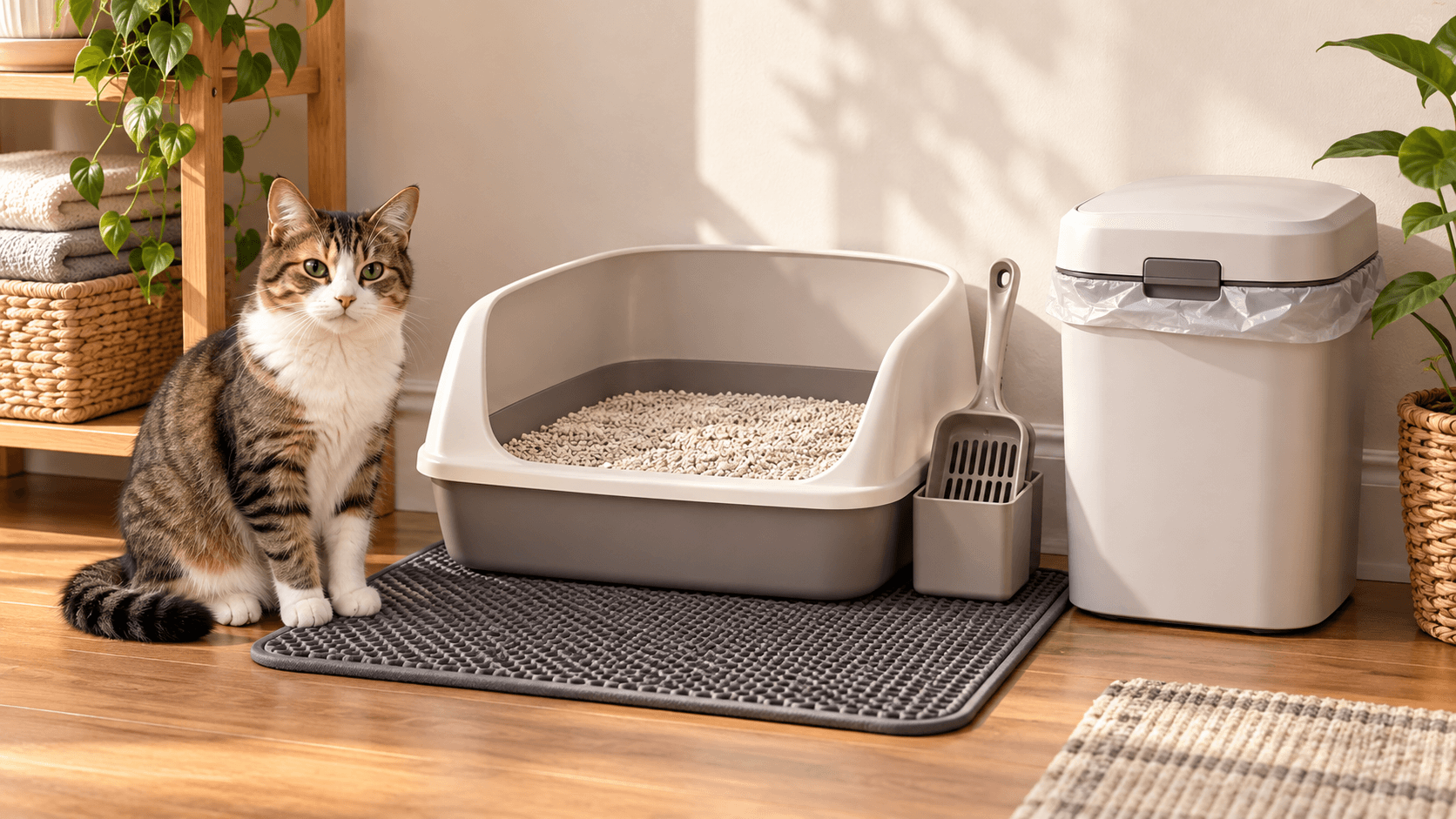
Disposal language often appears alongside descriptions of litter box locations, waste containers, litter mats, and cleaning supplies. A home may have a designated place for temporary containment, while another household may use a broader household-waste area. These differences are part of ordinary layout and routine vocabulary.
Terms such as “sealed waste container,” “litter waste bag,” and “covered bin” describe object categories rather than a single required arrangement. The surrounding language may also mention odors, visible litter particles, cupboard storage, or the distance between the litter area and other household spaces.
Materials, Containers, and Visible Features
Common descriptions include flexible bags, rigid bins, lined containers, lids, handles, and absorbent surfaces. Material words may include plastic, paper, metal, or fabric, although the material alone does not establish a universal level of cleanliness or suitability.
Visible features often mentioned in household descriptions include a closed top, a removable liner, a narrow opening, or a nearby mat. These features are best understood as parts of an object’s appearance and placement. Their presence does not imply a guaranteed odor result, containment outcome, or safety standard.
Relationship to Litter-Area Cleanliness
Litter waste disposal language is closely connected with broader phrases such as litter area cleanliness, household cleaning context, and odor-related vocabulary. Descriptions may distinguish between fresh litter, used litter, loose particles, and waste stored before leaving the home.
The wording can also separate the litter box itself from the surrounding floor, wall, storage surface, or waste container. This distinction helps clarify whether a sentence concerns the litter material, the box area, or the household object associated with disposal.
Non-Prescriptive Points Around the Topic
- Waste category: Litter waste usually refers to removed material associated with the litter box rather than the box, mat, or surrounding floor.
- Container language: Bags, bins, pails, and covered containers are common terms for objects connected with temporary household containment.
- Placement context: Disposal objects may appear near a litter area, inside a cupboard, or within a broader household waste space.
- Material wording: Plastic, paper, metal, and fabric describe visible construction categories without establishing a universal performance claim.
- Odor vocabulary: Phrases such as “odor control” or “odor-related storage” describe household language and do not promise odor removal.
- Routine observations: Disposal terminology often appears in descriptions of recurring household patterns, storage locations, and litter-area organization.